Why Trump zeroed in on Greenland and why it matters in 3 maps
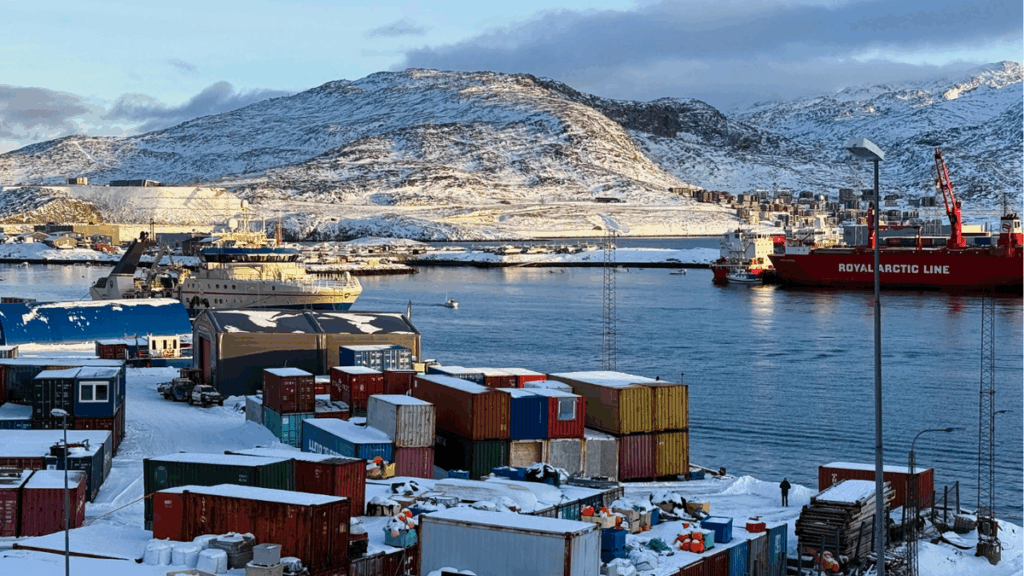
Greenland rarely draws global attention. But as ice melts and great powers inch closer, the world’s largest island has become a strategic prize — one that caught President Donald Trump’s eye long before most Americans were paying attention.
A semi-autonomous territory of Denmark, Greenland is home to a key U.S. military base and has become increasingly important to global security and trade as melting ice opens new shipping lanes and access to natural resources.
That shift underscores the serious geopolitical calculation behind Trump’s interest in the island’s location, military value and the rapidly changing Arctic.
TRUMP’S PUSH TO ACQUIRE GREENLAND SPARKS INTERNATIONAL MEDIA FRENZY ON REMOTE ISLAND
Greenland is divided into five municipalities, with most of its roughly 56,000 residents living in small coastal towns, leaving the island’s vast interior largely uninhabited. Put another way, Greenland has roughly one person for every 1,000 soccer fields of land.
Greenland’s sparse population is largely a product of its geography. Roughly 80% of the island is covered by an ice sheet formed about 3 million years ago, leaving vast areas of the territory uninhabitable.
Despite its small population, Greenland occupies a landmass comparable to global powers. By land area, it ranks among the world’s largest territories — a scale that has drawn attention from countries such as the United States, Russia and China as competition in the Arctic intensifies. It is nearly the size of Alaska and Texas combined.
Greenland’s location off Canada’s northeastern coast places it at the heart of Arctic defense planning. The U.S. has maintained a military outpost in northwestern Greenland since 1953 at the Pituffik Space Base, now operated by the U.S. Space Force.
Russia also maintains several military installations in the region, while China has sought greater access since declaring itself a “near-Arctic state” in 2018.
But geography isn’t the only reason Greenland draws global interest. Retreating Arctic ice is opening shipping lanes around the island that could significantly shorten trade routes between North America, Europe and Asia, adding an economic layer to its strategic importance.
The changing landscape has also drawn attention to Greenland’s deposits of rare earth elements and other critical minerals essential to modern technology, renewable energy and military systems.
TRUMP THREATENS TARIFFS ON COUNTRIES OPPOSING GREENLAND TAKEOVER PLANS
Rare earth elements — a group of 17 minerals — sit at the center of modern economies and militaries. They allow electronics to be smaller, more powerful and more efficient and are especially important in high-performance magnets used in electric vehicles, wind turbines, generators and precision guidance systems.
Their importance is even more pronounced in defense, where rare earths are used in missile guidance, radar, sonar, satellites and advanced aircraft. Because many of these applications have no easy substitutes, access to rare earths directly affects military readiness and technological advantage.
The world’s largest rare earth deposits are found in China, Vietnam, Brazil, Russia, Australia, Greenland and the United States. But China dominates the supply chain, accounting for roughly 60% of global mining and more than 90% of processing capacity.
The United States lacks a reliable, end-to-end supply chain for rare earths, leaving it dependent on foreign sources.
As the U.S. and European Union seek to reduce their reliance on China, Greenland has emerged as a potential counterweight to Beijing’s dominance and a focal point in the competition over critical minerals.
Whether the Trump administration is able to strike a deal to take over Greenland remains unclear. But as ice melts and competition in the Arctic intensifies, the island’s strategic importance is only likely to grow.